
 Available in US
Content
NHL Overtime Rules Create Unique Betting Angles
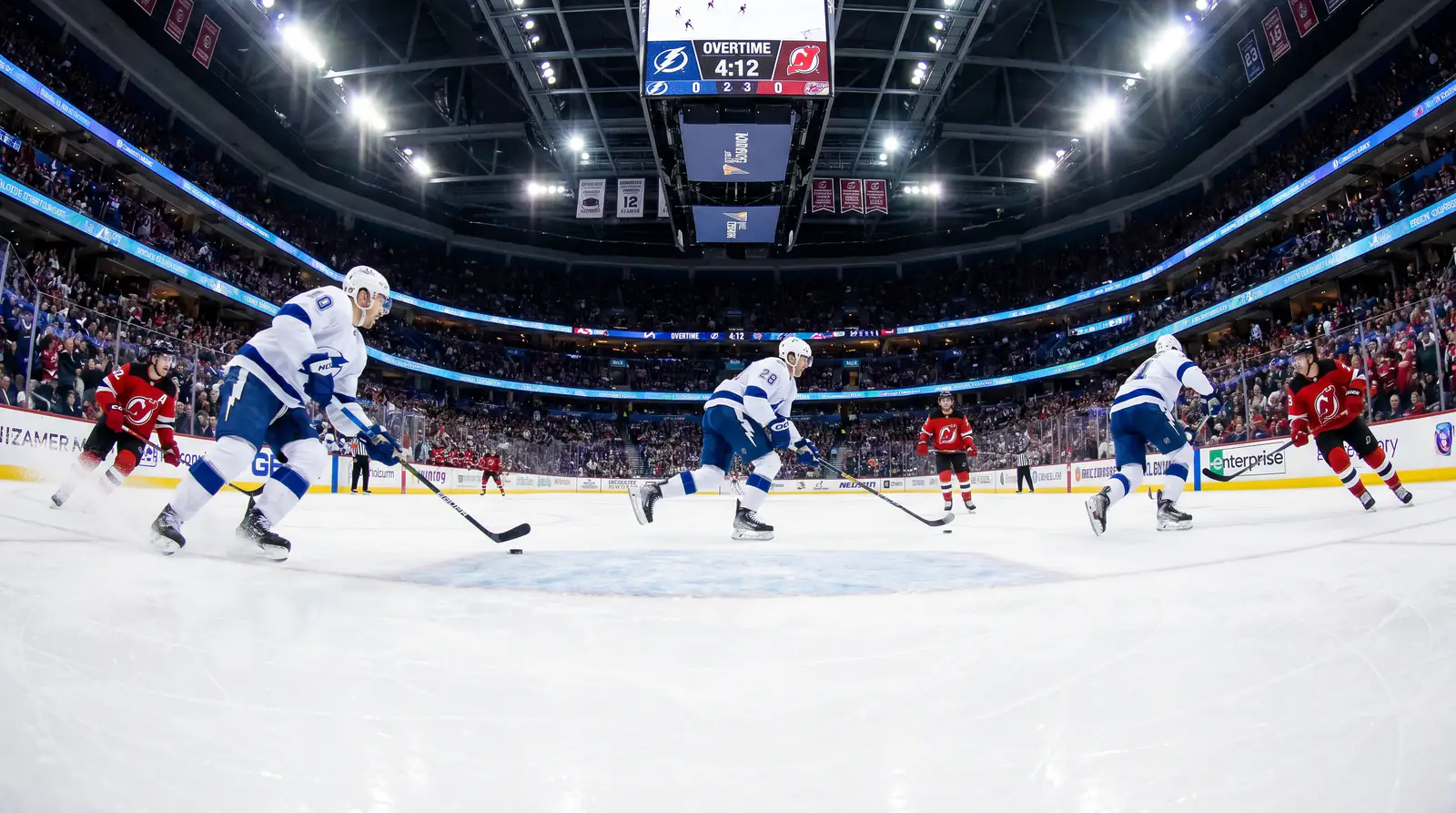
The first time I bet on an NHL game that went to overtime, I had no idea my moneyline ticket included extra time. In football, a 90-minute result is a 90-minute result — overtime is a separate event in cup competitions, and most league matches simply end. In the NHL regular season, every game has a winner. If regulation ends in a tie, a five-minute three-on-three overtime period follows, and if that fails to produce a goal, the game goes to a shootout. My bet settled based on the final result, including those extras, and the odds I had accepted reflected that structure. Understanding how overtime works is not a detail — it is the foundation of several profitable betting angles.

The overtime conversion rate — the percentage of overtime periods that produce a goal before the shootout — has fluctuated in recent seasons, dropping to a record low in 2025-26 at roughly 8 per cent below the previous season’s high of 71.6 per cent. That decline matters for bettors because it shifts probability between the overtime-winner market and the shootout market. When fewer overtime periods produce a goal, more games reach the shootout, and shootout outcomes are far more random than three-on-three play. The market does not always adjust quickly enough to seasonal shifts in conversion rates, which creates a window for informed punters.
Overtime also affects how you should think about regulation-time markets. Some bookmakers offer a “regulation time” moneyline that excludes overtime and shootout results, allowing you to bet on the three-period outcome including the draw. This market is priced differently from the standard moneyline and offers its own set of edges, particularly in games between evenly matched teams where the draw probability is elevated.
Regular Season OT vs. Playoff OT: Different Formats, Different Odds
I learned this distinction the hard way during my second year of playoff betting. Regular-season overtime is a five-minute three-on-three period followed by a shootout if necessary. Playoff overtime is sudden-death, five-on-five, full 20-minute periods that continue indefinitely until someone scores. These are completely different games with completely different betting implications, and conflating them will cost you money.

Three-on-three regular-season overtime is a track meet. The extra space on the ice creates breakaways, odd-man rushes, and high-danger chances at a rate that dwarfs five-on-five play. The expected goals per minute in three-on-three overtime is dramatically higher than in regulation, which means the team with better transition speed and puck-handling skill has a significant advantage. Betting on the overtime winner in the regular season is essentially a bet on which team has the superior skill players in open ice.

Playoff overtime inverts this dynamic entirely. Five-on-five sudden death is tense, structured, and cautious. Teams play conservatively because a single mistake ends the game and potentially the series. Shot volumes drop compared to regulation periods, goaltenders face fewer but higher-pressure chances, and the quality of defensive play becomes the decisive factor. Playoff overtime games can stretch to double and even triple overtime, with fatigue compounding the physical toll on skaters who have already played 60 minutes at playoff intensity.
For betting purposes, the key takeaway is that regular-season overtime favours the more skilled team, while playoff overtime favours the more disciplined and deeper team. If you are betting on a playoff game that you expect to be close, consider the overtime implications when evaluating the moneyline. A team with elite goaltending and strong defensive depth is more likely to survive a multi-overtime playoff game than a team built on offensive firepower and thin blueline depth.
Live Betting in Overtime: When to Act and When to Wait
Overtime live betting is where I have made some of my best and worst decisions. The odds move at extraordinary speed during a five-minute three-on-three period, and the temptation to react to every rush and every save is powerful. But discipline separates profitable overtime bettors from reactive ones, and the discipline is almost entirely about knowing when not to bet.

In regular-season overtime, I set a simple rule: I do not live-bet the overtime winner unless I identified a pre-game edge on the team’s three-on-three performance. Some teams — typically those with elite centres who thrive in open ice — consistently outperform in three-on-three situations. If I have already identified that edge before the game starts, I wait for the overtime to begin and look for a price that reflects my pre-game assessment. If I did not do the homework pre-game, I watch without betting.
The exception is the “will the game go to a shootout” market, which becomes available during overtime at some bookmakers. When the overtime period is half over and neither team has scored, the shootout probability increases sharply, and the posted odds may not fully reflect the declining time remaining. This is a narrow but repeatable edge for punters who track overtime conversion rates and can calculate the implied probability of a scoreless overtime with two minutes remaining.
Playoff overtime live betting follows a different rhythm. The longer format — full 20-minute periods — gives you time to observe the flow before committing. I typically watch the first five minutes of a playoff overtime period to assess which team has the territorial advantage, then look for a live price that reflects my updated evaluation. The market tends to overreact to early chances in playoff OT, creating live betting opportunities that reward patience over speed.
Shootout Markets and Their Effect on Full-Game Results
Shootouts are the most divisive topic in hockey, and they should be equally divisive among bettors. From a wagering perspective, shootouts are essentially coin flips with a slight skill component. The best shootout teams in the league convert at rates that are only marginally above average, and individual shootout performance is notoriously inconsistent from season to season. If your moneyline bet is riding on a shootout, you have effectively handed your edge to randomness.

Roughly 75 per cent of NHL games are decided by one or two goals, and a meaningful chunk of those close games reach overtime and potentially the shootout. This means that a non-trivial percentage of full-game moneyline results are determined by a mechanism that is extremely difficult to predict. For bettors who value analytical edge, this is a problem — and the solution is to be aware of it rather than to pretend it does not exist.

Some bookmakers offer a “to win in a shootout” prop market, which is a pure randomness play. I avoid it entirely. Others offer the regulation-time moneyline, which removes overtime and shootout from the equation. I use this market frequently for games between evenly matched teams, because it prices the draw as a possible outcome and eliminates the shootout noise from the result. The regulation-time draw typically sits between 4.00 and 5.00, and in games where my model projects a close contest, the draw represents genuine value that the standard moneyline obscures.
The broader lesson is that shootouts introduce a layer of randomness that dilutes analytical edge on the full-game moneyline. If you are serious about long-term profitability, factor shootout variance into your approach. This might mean using regulation-time markets, reducing unit sizes on games you expect to be close, or simply accepting that some percentage of your moneyline bets will be decided by a process that no model can reliably predict.
Do standard NHL moneyline bets include overtime and the shootout?
In the regular season, standard moneyline bets include overtime and the shootout — whoever wins the game wins the bet. Some bookmakers also offer a regulation-time moneyline that settles after 60 minutes, with the draw as a third outcome.
What happened to overtime conversion rates in 2025-26?
The overtime conversion rate dropped to a record low in 2025-26, falling roughly 8 per cent below the previous season’s high of 71.6 per cent. Fewer overtimes were decided by a goal, meaning more games reached the shootout than in recent seasons.
Is playoff overtime different from regular-season overtime in the NHL?
Completely different. Regular-season overtime is a five-minute three-on-three period followed by a shootout if needed. Playoff overtime uses full 20-minute sudden-death periods at five-on-five with no shootout. This structural difference significantly affects betting strategy.
