
 Available in US
Content
Three Periods, Three Distinct Betting Profiles
I spent my first year of NHL betting treating every game as a single 60-minute event. Moneyline, puck line, total — all full-game markets. Then a sharp friend pointed out something that should have been obvious: an NHL game is not one contest, it is three. Each period has its own tempo, its own tactical identity, and its own scoring profile. Once I started breaking games into their component parts, I found edges I had been walking past for months.

Period betting lets you wager on the outcome or total goals of an individual period rather than the full game. The markets are straightforward — period winner (home, away, or draw), period total (over/under a set number, usually 1.5), and in some cases period correct score. What makes them valuable is that the dynamics of each period are measurably different. Roughly 75 per cent of NHL games are decided by just one or two goals, meaning the margin is thin enough that period-level tendencies can tilt probability in a punter’s favour.
The first period tends to be tight and tactical. The second period is where most coaches adjust their matchups and games begin to open up. The third period introduces desperation, empty-net scenarios, and the highest-variance scoring environment of the three. Betting each period the same way ignores these structural differences, and the bookmakers do not always price them accurately — particularly for teams whose period-by-period profiles diverge sharply from their full-game results.
First-Period Betting: Cagey Starts and Draw Dominance
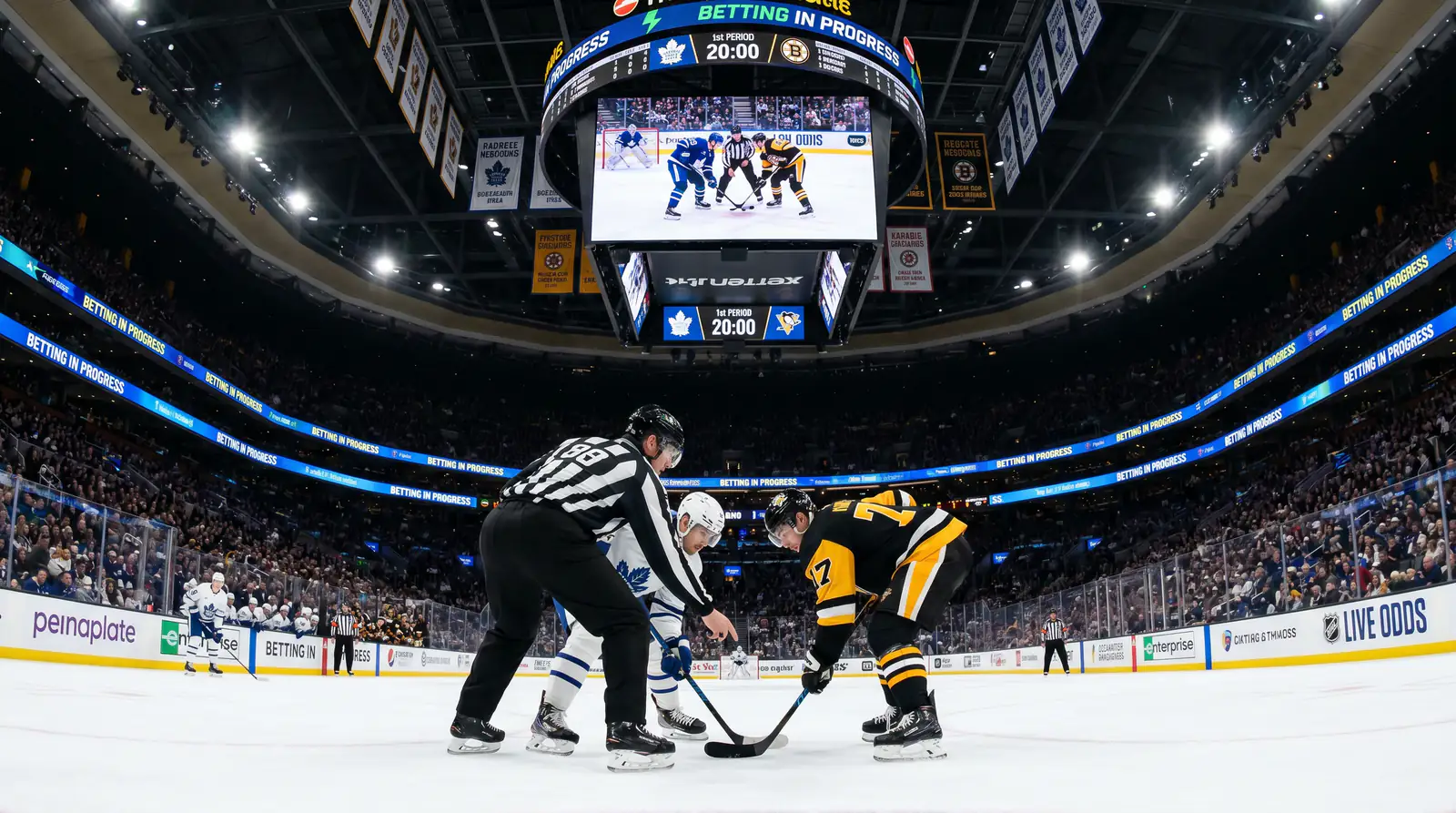
Two seasons ago I ran a simple filter on first-period results across the entire NHL and the number that jumped out was the draw rate. In a typical NHL season, first periods end in a tie — no goals or equal goals — somewhere around 45 to 50 per cent of the time. That is an enormous number when you consider that the draw is often priced at 3.20 to 3.50 in the period market. There is structural value hiding in plain sight.

The reason for this pattern is tactical. Coaches use the first period to feel out the opposition, particularly in away games where they do not have last change. Defensive structure takes priority over offensive aggression. Line matching is at its most deliberate. Goaltenders are cold and sharp, having just completed their warm-up routines — they tend to post their best save percentages in the opening 20 minutes. All of this suppresses scoring and produces the cagey, low-event starts that feed the draw outcome.

Home-ice advantage is worth approximately 0.2 goals per game across the full 60 minutes, but that advantage is not evenly distributed. The home team’s edge is smallest in the first period, when neither side has fully established its tempo, and largest in the third, when crowd energy and last change become decisive. For first-period betting, this means the home team’s moneyline edge is thinner than the full-game price suggests, and the draw becomes the dominant outcome to target.
My approach to first-period betting is selective. I focus on games where both teams rank in the bottom half of the league for first-period goals scored and the draw is priced at 3.30 or above. The hit rate on this filter has been consistently above the implied probability over the past two full seasons. It is not a system that fires every night, but when the conditions align, the value is reliable.
Second and Third Periods: Where Scoring Patterns Shift
If the first period is chess, the second is where someone flips the board. I have watched hundreds of games where two teams played a scoreless first period, then combined for four goals in the second. The tactical restraint dissolves. Coaches commit to their preferred matchups, fatigue begins to nibble at the bottom-six forwards, and the ice surface — which was freshly resurfaced before the game — degrades enough to create odd bounces and transition opportunities.

Second-period scoring rates are typically the highest of the three periods across the NHL. The over on a 1.5-goal second-period total hits more frequently than the same market in the first or third period. This is partly structural — teams play the second period in the direction of the longer change, which creates more odd-man rushes when tired players cannot reach the bench — and partly psychological. Coaches who were conservative in the first period adjust their systems to generate more offence once they have seen how the opposition plays.
Third-period betting is a different animal entirely. The score dictates everything. A team trailing by one goal in the final five minutes will pull their goaltender for an extra attacker, creating a six-on-five advantage that dramatically inflates the expected goals for both sides. The trailing team has more shots but lower-quality chances against a set defence, while the leading team gets empty-net opportunities that convert at an extremely high rate. This produces a bimodal distribution: third periods are either low-scoring grinds or chaotic multi-goal affairs, with relatively little middle ground.
I approach second and third periods differently. For second periods, I lean toward the over on the period total when both teams have shown strong second-period shot generation rates in their last ten games. For third periods, I tend to avoid pre-game markets entirely and shift to live betting once I can see the game state. The third period is where live betting strategies become most nuanced, and reacting to the score is more profitable than predicting it blind.
Using Period Markets in a Live-Betting Workflow
Period betting reaches its full potential when you combine it with live markets. Here is a workflow I have refined over several seasons that integrates pre-game period research with in-play adjustments.

Before the game, I identify whether the matchup profiles as a slow-start or fast-start game. Teams with aggressive forechecking systems and high first-period shot rates — Colorado, Florida, Edmonton in recent years — tend to produce more first-period action. Teams built around structure and shot suppression — New Jersey, Minnesota — tend to suppress early scoring. If both teams are low-event first-period sides, I consider a first-period draw bet pre-game.

Once the game starts, I watch the first period without betting if I do not have a pre-game position. The first ten minutes reveal the pace, the officiating standard, and whether the goaltenders are sharp. If the first period ends scoreless or 1-1, I reassess the second period based on what I have seen. A scoreless first period with high shot volume and multiple posts or crossbars suggests pent-up scoring that is likely to break through in the second — an over spot on the second-period total.
The third period is where discipline matters most. Live odds in the third period swing wildly based on score effects, particularly when a team pulls its goaltender. I set a rule for myself: no live bet in the final two minutes unless I have a specific angle on the empty-net situation. The odds move too fast and the variance is too high for reactive betting. Instead, I use the third period to gather information for future games — tracking how teams perform under pressure and how coaching decisions affect late-game scoring patterns.
Period betting will not replace full-game markets as the core of your NHL wagering, but it adds a layer of precision that most punters ignore. The teams that are strong overall but weak in specific periods are the ones that create the most exploitable gaps between full-game odds and period odds.
What is the most common first-period result in the NHL?
A draw is the most common first-period result, occurring in roughly 45 to 50 per cent of games. First periods tend to be tactically cautious, with goalenders at their sharpest and coaches prioritising defensive structure over offensive risk.
Which NHL period has the most goals on average?
The second period typically produces the highest scoring rate. Tactical adjustments, line-matching commitments, and the longer change to the bench create more transition opportunities and odd-man rushes than the more structured first period.
Can I bet on individual periods at UK bookmakers?
Most major UK-licensed bookmakers offer period betting for NHL games, including period winner, period total, and sometimes period correct score. Markets are usually available from a few hours before puck drop and remain active for live betting once each period begins.
