
 Available in US
Content
Correct Score in NHL: The Market with the Longest Odds
A colleague once asked me whether I bet on NHL correct scores, and my answer was honest: rarely, and never as a core strategy. Correct score betting in hockey is the ultimate high-risk, high-reward market — odds routinely stretch from 8.00 to 30.00 or beyond, which makes a single winner feel spectacular. But the hit rate is brutal, and treating correct score as anything other than a small-staking satellite market is a recipe for bankroll erosion.

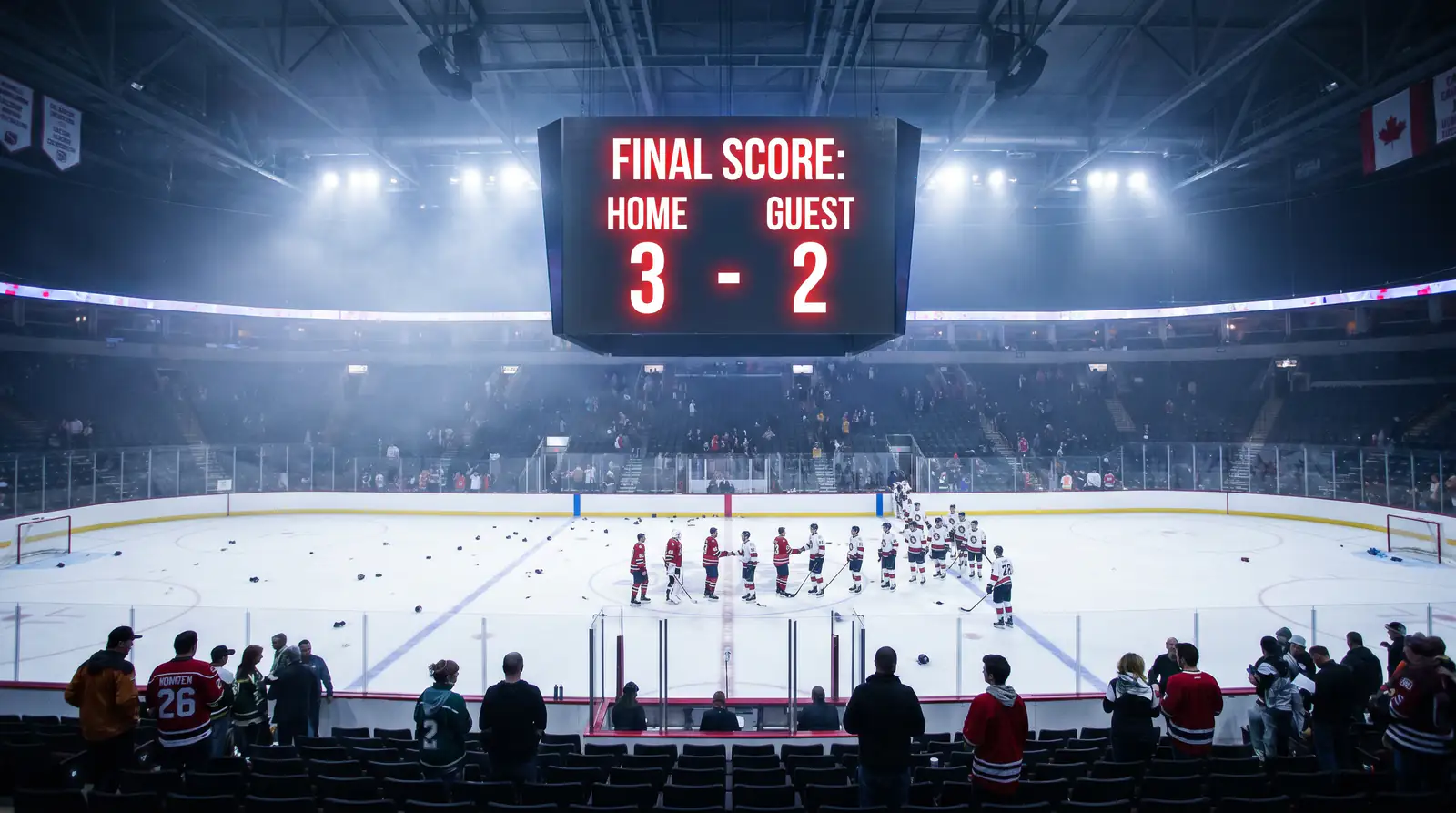
The reason correct score odds are so long in hockey is the sport’s scoring distribution. A typical NHL game produces between four and seven total goals, with the most common final scores clustering around 3-2, 4-3, 2-1, and 3-1. But even the most common scoreline — 3-2 — occurs in only about 10-12 per cent of games. Compare that to football, where 1-0 and 2-1 results each account for 15 per cent or more of Premier League outcomes. Hockey’s wider scoring range and higher variance make pinpointing the exact final score substantially harder.
The save percentage evolution in the NHL adds another layer of difficulty. A save percentage of .912 ranked third in the entire league in the 2025-26 season; a decade earlier, that same number would have placed a goaltender dead last. Goaltending has improved so dramatically that scoring has compressed, but the distribution of goals within that compressed range remains wide enough to confound correct score predictions. You are trying to hit an exact number in a sport where the difference between a 2-1 and a 4-3 game often comes down to a single post, a lucky bounce, or a late empty-net goal.
Most Common NHL Scorelines and What Drives Them
I spent a weekend last summer pulling five seasons of NHL final scores and sorting them by frequency. The exercise confirmed what experienced bettors already sense: certain scorelines are structurally more likely than others, and understanding why helps you make more informed correct score selections when you do venture into this market.

The 3-2 scoreline — combining both home 3-2 and away 3-2 results — is consistently the most frequent final score in the NHL. It occurs in roughly one out of every eight or nine games. The 4-3 scoreline follows closely, then 2-1, 3-1, and 4-2. Together, these five scorelines account for approximately 45-50 per cent of all NHL game results. The remaining 50 per cent is scattered across dozens of possible scores, from 1-0 shutouts to 7-4 barnburners.

What drives these patterns is the interplay between goaltending quality and offensive volume. The average NHL team generates around 30 shots per game at a league-average shooting percentage of roughly 9-10 per cent, producing about 2.8-3.2 goals per game. When both teams perform near their averages, the result tends to land in the 3-2 to 4-3 range. Deviations from this cluster are usually caused by extreme goaltending performances — a starter who posts a .950 save percentage producing a 1-0 or 2-1 final, or a struggling backup allowing a 6-3 blowout.
For correct score betting, this analysis suggests concentrating your selections within the 2-1 to 4-3 band and avoiding exotic scorelines. A 5-0 or 6-1 result might offer tempting odds at 25.00 or higher, but the probability is genuinely tiny. Your edge, if one exists, is in the cluster of common scorelines where your pre-game analysis of goaltending matchups and totals tendencies can tilt the probability marginally in your favour.
A Realistic Approach to Correct Score Betting
Realism is the single most important word in correct score betting. If you approach this market expecting to win regularly, you will lose money. If you approach it as an occasional supplement to your core markets — moneyline, puck line, totals — with appropriately small stakes and realistic expectations, it can add a layer of excitement without threatening your bankroll.

My approach starts with a filter. I only consider correct score bets in games where I have a strong view on both the total goals and the winning team. If my analysis projects a low-scoring game where the home side wins — say, a defensive team with an elite goaltender hosting a mid-table opponent — I might back 2-1 at 9.00 or 3-1 at 10.00 as a quarter-unit side bet alongside my primary position on the under or the moneyline. The correct score bet is an extension of my existing analysis, not a standalone punt.
I never back more than two scorelines per game. Spreading your stake across four or five possible scores might feel like it increases your chances, but it also guarantees that any individual winner pays out less than it should relative to the combined stake. Two scorelines — my most likely and my second most likely — keep the mathematics clean and the potential payouts meaningful.
The other constraint is frequency. I place correct score bets on perhaps one in every fifteen to twenty games I analyse — only when the conditions are unusually clear. This discipline is essential because the variance in correct score betting is enormous. Even a well-reasoned correct score bet will lose 85-90 per cent of the time. The only way to survive that hit rate is to keep the stakes small, the frequency low, and the expected value positive on each selection.
Staking Correct Score Bets: Small Fractions, Realistic Expectations
Staking is where most correct score bettors go wrong, and I include my earlier self in that category. The allure of 12.00 or 15.00 odds tempts you into staking a full unit, reasoning that the payout justifies the risk. It does not. A full-unit correct score bet that loses nine times out of ten will drain your bankroll faster than a string of losing moneyline bets, because the losses are concentrated and the wins are infrequent.

I stake correct score bets at one-quarter of my standard unit. If my regular unit is 20 pounds, a correct score bet is 5 pounds. At those stakes, a 12.00 winner returns 60 pounds — a meaningful profit — while nine consecutive losses cost 45 pounds, which is slightly more than two standard-unit moneyline losses. The mathematics of small staking keep correct score betting sustainable within a broader portfolio.

The psychological dimension matters too. Correct score betting produces long losing streaks interrupted by occasional large winners. If your stake is too high, the losing streaks feel punishing and the temptation to chase — increasing your stake to “make back” the recent losses — becomes difficult to resist. Quarter-unit staking eliminates that emotional pressure. A five-pound loss on a correct score bet does not sting enough to trigger irrational behaviour, and the occasional 50 or 60-pound winner feels like a genuine bonus rather than a recovery.
Finally, track your correct score bets separately from your core markets. I keep a dedicated spreadsheet column for correct score wagers, with their own profit-and-loss line. This separation prevents the high variance of correct score betting from distorting your assessment of your overall NHL betting performance. Your moneyline and totals records should reflect your analytical skill; your correct score record should reflect a disciplined side market with appropriately managed expectations.
What is the most common final score in NHL games?
The 3-2 scoreline is consistently the most frequent result in the NHL, occurring in roughly one out of every eight to nine games. Other common scores include 4-3, 2-1, 3-1, and 4-2.
How much should I stake on NHL correct score bets?
Correct score bets should be staked at a fraction of your standard unit — typically one-quarter or less. The hit rate is inherently low, so small stakes protect your bankroll during the inevitable losing streaks while still producing meaningful returns when you connect.
